
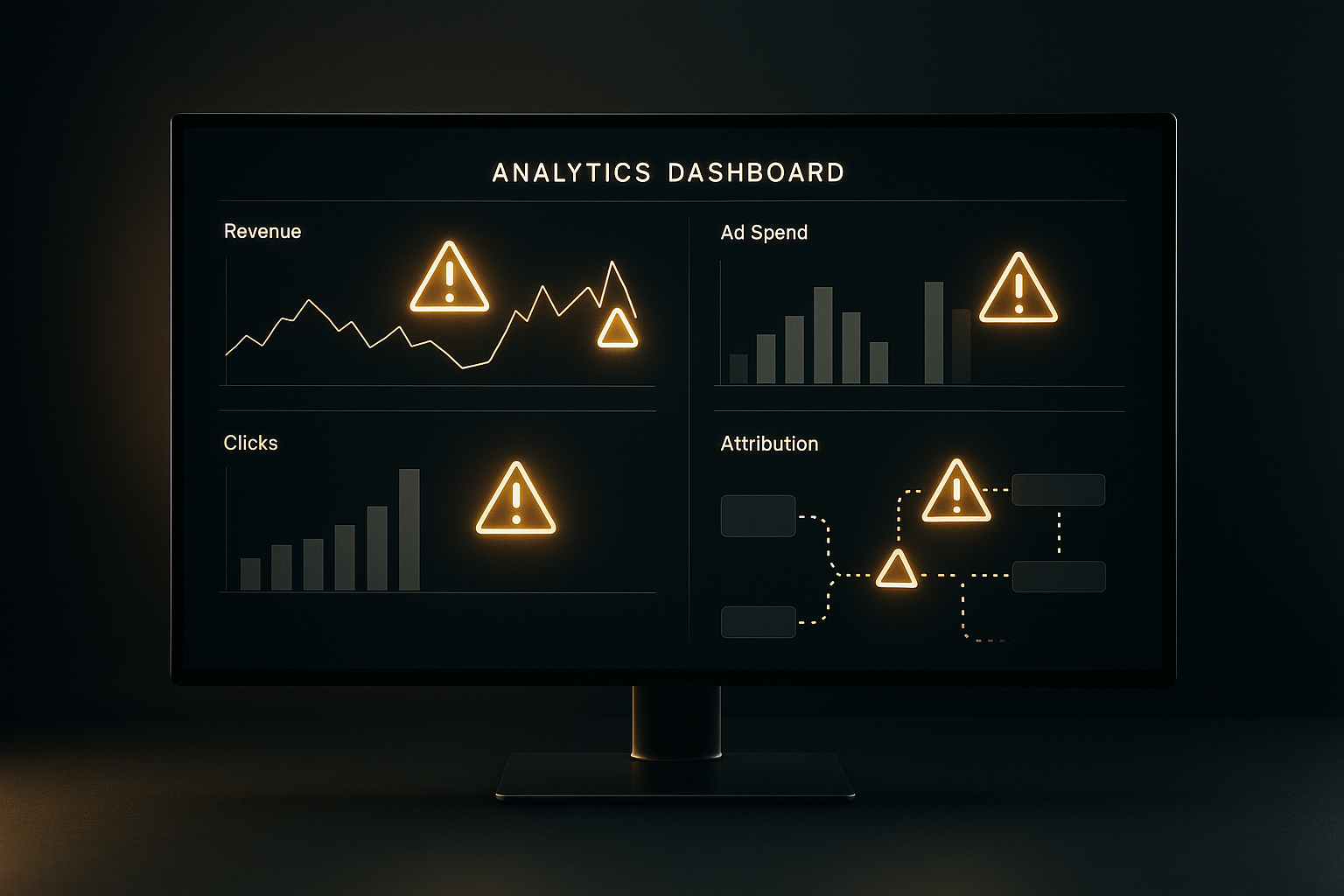
Understanding why your ad platform reports success while your bank account tells a different story is critical for growth teams in 2026. Most businesses running campaigns on Google, Meta, or other platforms see impressive click counts, low cost-per-click numbers, and even conversion events, yet their revenue remains flat. The disconnect happens because ad platforms measure their success, not yours. They track actions that benefit their reporting, like clicks and pixel fires, while your business needs booked revenue, qualified appointments, and deals that close.
Quick Answer: Ad platforms optimize for metrics they can measure directly, such as clicks, impressions, and pixel-based conversions, rather than actual booked revenue. Most platforms lack proper call tracking, CRM integration, and multi-touch attribution, meaning they report success based on top-of-funnel activity while real revenue leaks through gaps in tracking, follow-up, and attribution. Fixing this requires connecting ad data to CRM systems, implementing call tracking, and measuring revenue outcomes instead of platform vanity metrics.
What Ad Platforms Actually Measure
Ad platforms built their entire infrastructure around metrics they control. Therefore, they report success based on actions that occur within their ecosystem, not what happens in your business after someone clicks.
1. Clicks and Impressions Instead of Conversations
Clicks represent the start of a customer journey, not the end. A click means someone saw your ad and took one action, but it reveals nothing about whether they called, filled out a form correctly, or ever entered your sales process. Impressions count how many times your ad appeared on a screen, regardless of whether anyone noticed or cared. Both metrics cost you money but generate zero revenue on their own.
2. Platform-Defined Conversions
Conversions in ad platforms typically mean a pixel fired or a form was submitted. A pixel fire is a small piece of code that reports back to the ad platform when someone lands on a specific page. However, pixels cannot measure phone calls, which represent 40 to 60 percent of high-intent leads for service businesses in Sarasota, Bradenton, Lakewood Ranch, and Venice. Additionally, form submissions often include spam, duplicates, or unqualified leads that never convert to revenue.
3. Attribution Windows That Ignore Reality
Attribution windows define how long after someone clicks an ad the platform will claim credit for a conversion. Most platforms use seven-day click and one-day view attribution by default. In reality, buyers research over weeks or months, call multiple times, and interact across channels before booking. The platform cannot see these patterns because it only tracks its own touchpoints, not your entire customer journey.
4. Optimization Toward Cost Per Click, Not Revenue
Ad platforms optimize campaigns to reduce cost per click (CPC) or cost per acquisition (CPA) as defined by their pixel events. CPC measures how much you pay each time someone clicks your ad. However, a low CPC means nothing if those clicks never turn into phone calls, appointments, or signed contracts. Platforms algorithmically favor actions that look efficient in their dashboard, even when those actions produce no revenue.
5. No Connection to Your CRM or Sales Process
Ad platforms exist completely separate from your customer relationship management system (CRM), which stores actual lead data, appointment records, and closed deal information. A CRM is software that tracks every interaction with prospects and customers throughout the sales cycle. Without integration between ad platforms and your CRM, you cannot measure which campaigns drive real appointments, which sales reps convert platform leads, or which ad spend actually produces profit. Consequently, you optimize based on incomplete data.
Why Your Ad Platform Misses Most Revenue Signals
Most businesses lose revenue attribution the moment a prospect takes an action the ad platform cannot see. In fact, the majority of conversion paths include multiple invisible steps between click and close.
Inbound Calls Break Attribution
Phone calls represent the highest-intent action a prospect can take, yet standard ad platform tracking completely misses them. When someone clicks your ad, visits your site, then calls the number in your header, the ad platform records a click but never knows about the call. Call tracking phone numbers are dynamic numbers that replace your website phone number and route calls while capturing source data. Without call tracking integrated into your campaigns, every phone lead appears as an unknown source in your reporting. This gap matters significantly because call leads close at two to five times the rate of form fills for service businesses nationwide.
Multi-Touch Journeys Get Flattened
Real buyers interact with your brand across multiple channels before converting. A prospect might click a Google ad, leave, see a Facebook retargeting ad, call your business, browse your website again, then book online. Ad platforms use last-click attribution by default, meaning they give 100 percent credit to whichever ad the person clicked immediately before converting. Last-click attribution is a model that assigns all conversion credit to the final touchpoint. This approach ignores every other marketing touchpoint and makes early-stage awareness campaigns look ineffective even when they drive the entire journey.
Form Spam and Junk Leads Count as Conversions
Ad platforms count every form submission as a conversion, regardless of quality. Therefore, your dashboard shows 50 conversions while your sales team only receives 12 real leads. The other 38 were bot submissions, competitor research, or people who entered fake information. Additionally, many form submissions never get followed up because they land in a generic inbox nobody monitors. The ad platform reports success, you keep spending, and revenue never materializes.
Sales Cycle Delays Hide True Performance
High-value services often have sales cycles lasting 30 to 90 days or longer. Someone clicks your ad today, calls next week, meets with your team two weeks later, and signs a contract 45 days after that. Ad platforms report campaign performance based on immediate conversion actions, not eventual revenue. Consequently, campaigns that drive high-lifetime-value customers look expensive or ineffective in platform dashboards because the revenue arrives outside the attribution window.
Platform Algorithms Optimize for the Wrong Goal
Ad platform algorithms learn from the conversion signals you provide. If you tell Google Ads that a form submission is a conversion, the algorithm finds more people likely to submit forms, not more people likely to book and pay. Similarly, if you optimize for clicks, the algorithm delivers clicks from users who click everything but buy nothing. The platform does exactly what you asked, just not what your business needs. For more on connecting systems properly, see our guide on custom AI systems for growth teams.
How to Fix Revenue Tracking Across Ad Platforms
Fixing attribution requires building infrastructure that connects ad platforms to actual revenue outcomes. Most growth teams need to implement four core systems.
Implement Call Tracking with Source Attribution
Call tracking systems assign unique phone numbers to each marketing source, then capture caller data and route calls while recording source information. When someone clicks a Google ad and calls, the system logs that call came from Google Ads, which campaign, which ad group, and which keyword. Moreover, advanced call tracking integrates with your CRM to log call recordings, transcripts, and outcomes so you can measure which calls turned into booked appointments. Call tracking for Sarasota and Bradenton businesses typically costs $50 to $200 per month depending on call volume and feature requirements.
Connect Your CRM to Ad Platforms
CRM integration sends closed deal data back to ad platforms so algorithms can optimize for revenue, not clicks. Customer relationship management integration works by passing conversion events like “appointment booked” or “deal closed” from your CRM to Google Ads, Meta Ads, and other platforms using API connections or tools like Zapier. Once connected, ad platforms receive revenue signals 30 to 90 days after the initial click and learn which audiences, keywords, and creatives actually drive profit. This feedback loop transforms campaign performance within 60 to 90 days.
Build Multi-Touch Attribution Models
Multi-touch attribution assigns fractional credit to every touchpoint in the customer journey. Instead of giving 100 percent credit to the last click, a multi-touch model might assign 30 percent to the first Google ad, 20 percent to an email campaign, 30 percent to a retargeting ad, and 20 percent to direct website traffic. Multi-touch attribution requires unified tracking across all channels, typically using a data warehouse or marketing analytics platform. Businesses nationwide implementing multi-touch attribution discover that channels they considered ineffective were actually driving 20 to 40 percent of eventual revenue.
Track Revenue Outcomes, Not Platform Metrics
Revenue tracking means measuring dollars booked, appointments held, and deals closed, then attributing those outcomes back to specific campaigns. Instead of optimizing for cost per click, you optimize for cost per booked appointment or cost per dollar of revenue. This shift requires tracking every lead through your sales process, recording which leads came from which campaigns, and calculating actual ROI. For example, if a Google Ads campaign costs $3,000 per month and generates $15,000 in booked revenue, your ROI is 5x, regardless of what the platform dashboard says about clicks or conversions.
Use Server-Side Tracking to Recover Lost Data
Browser-based tracking pixels fail 30 to 50 percent of the time due to ad blockers, browser privacy settings, and iOS tracking restrictions. Server-side tracking sends conversion data directly from your server to ad platforms, bypassing browser limitations. Server-side tracking is a method that routes conversion data through your web server instead of relying on browser cookies and pixels. This approach recovers 20 to 40 percent of lost conversion data and dramatically improves ad platform optimization. Implementation requires technical setup but pays for itself within weeks through improved campaign performance.
Implement Closed-Loop Reporting Systems
Closed-loop reporting connects every stage of the customer journey into one unified view. You track which ad someone clicked, which page they landed on, what they did on your site, whether they called or filled a form, how your team followed up, whether they booked an appointment, and whether they became a customer. Closed-loop reporting is a system that tracks prospects from first click through final sale and attributes revenue back to specific marketing sources. This complete view reveals exactly which campaigns drive revenue, which sales reps close platform leads effectively, and where leaks occur in your funnel.
Why Your Ad Platform Reports Success While Revenue Stays Flat
The contradiction between platform reporting and bank account reality stems from systematic measurement gaps. Ad platforms have no incentive to measure your revenue because their business model depends on you spending more, not earning more.
Platforms report vanity metrics that make campaigns look successful even when they produce zero profit. A vanity metric is a number that looks impressive but does not correlate with business growth or revenue. Examples include impressions, reach, engagement rate, and click-through rate. These numbers increase easily without improving your bottom line. Meanwhile, revenue metrics like cost per booked appointment, customer acquisition cost, and return on ad spend tell the truth about campaign performance.
Furthermore, platforms optimize campaigns based on the signals you send them. If your conversion tracking only captures form submissions and ignores phone calls, the algorithm delivers more form submissions and fewer calls. Since calls often convert at three to five times the rate of forms for service businesses, your revenue drops while platform metrics improve. This misalignment persists until you fix tracking and send revenue signals back to the platform.
Most businesses also fail to follow up on platform leads effectively. Research shows that 30 to 50 percent of inbound leads never receive any follow-up, and 70 percent receive inadequate follow-up. Even a perfectly optimized campaign generates zero revenue if leads reach a broken sales process. Ad platforms never see this breakdown because it happens after their tracking ends.
What Revenue-Focused Ad Management Looks Like
Growth teams that measure booked revenue instead of platform metrics build completely different systems. They implement infrastructure that connects ad platforms to CRM data, tracks every conversion path, and optimizes for profit.
Revenue-focused campaigns start with tracking setup that captures phone calls, form submissions, chat conversations, and email inquiries, then attributes each back to specific campaigns. Next, they integrate CRM systems with ad platforms so closed deal data feeds back into campaign optimization. This integration allows algorithms to learn from actual revenue outcomes rather than proxy metrics.
Additionally, revenue-focused teams build custom dashboards that display cost per booked appointment, cost per customer, customer lifetime value, and return on ad spend across all channels. These dashboards pull data from ad platforms, call tracking systems, CRMs, and payment processors to show true campaign performance. As a result, marketing decisions get made based on revenue impact, not platform vanity metrics.
Finally, revenue-focused ad management includes systematic lead follow-up processes. Every inbound call gets answered by trained staff or routed according to business rules. Every form submission receives a follow-up call within five minutes. Every missed call triggers an automatic text message and callback attempt. These processes ensure that well-targeted platform traffic converts to actual appointments and revenue.
How Much Does Revenue-Focused Tracking Cost?
Implementing proper revenue tracking requires investment in software, integration, and sometimes professional services. However, most businesses recoup costs within 30 to 60 days through improved campaign performance.
Call tracking systems cost $50 to $200 per month for small businesses in Lakewood Ranch and Venice, scaling up to $300 to $800 per month for businesses with high call volumes. CRM platforms range from free (HubSpot CRM) to $50 to $150 per user per month for platforms like Salesforce or Zoho. Integration tools like Zapier cost $20 to $100 per month depending on automation volume.
Professional services to implement call tracking, connect your CRM to ad platforms, build multi-touch attribution, and create revenue dashboards typically cost $3,000 to $12,000 as a one-time project. Monthly management and optimization services range from $1,500 to $5,000 per month depending on ad spend and complexity.
Most importantly, the cost of not implementing revenue tracking far exceeds the cost of proper infrastructure. Businesses wasting 30 to 50 percent of ad spend on untracked calls and broken attribution lose thousands per month while their ad platforms report success. Fixing tracking typically improves campaign ROI by 40 to 150 percent within 90 days, making the investment pay for itself quickly.
Frequently Asked Questions About Why Your Ad Platform Doesn’t Track Revenue
What is the main reason ad platforms do not track revenue?
Ad platforms optimize for actions they can measure directly, like clicks and pixel-based conversions, because they cannot access your CRM, call tracking data, or sales records. Revenue tracking requires integrating external business systems with ad platforms, which most businesses never implement.
How do I track phone calls from my ad campaigns?
Call tracking systems assign unique phone numbers to each ad source, capture caller data when someone dials, and log which campaign drove each call. Call tracking for businesses in Sarasota and Bradenton typically integrates with both ad platforms and CRM systems to close the attribution loop.
Why does my ad platform show conversions but my sales team has no leads?
Most ad platforms count form submissions and pixel fires as conversions regardless of lead quality, follow-up success, or eventual revenue. Many counted conversions are spam, duplicates, or leads that never receive proper follow-up, creating a gap between platform reporting and sales reality.
What is multi-touch attribution and why does it matter?
Multi-touch attribution assigns partial credit to every marketing touchpoint in the customer journey instead of giving all credit to the last click. Multi-touch models reveal which awareness and consideration campaigns drive eventual revenue even when they don’t generate immediate conversions, helping businesses invest properly across the entire funnel.
How much does it cost to implement proper revenue tracking?
Revenue tracking infrastructure including call tracking, CRM integration, and attribution modeling typically costs $3,000 to $12,000 for initial setup plus $50 to $500 per month in software costs for businesses nationwide. Professional ongoing management adds $1,500 to $5,000 monthly depending on ad spend and complexity.
Can I connect my CRM directly to Google Ads and Meta Ads?
Yes, most modern CRM platforms offer native integrations or API connections that send conversion events from your CRM back to ad platforms. These integrations allow Google Ads and Meta Ads to optimize for booked appointments and closed deals instead of form submissions, dramatically improving campaign performance.
What percentage of leads typically come from phone calls versus forms?
Service businesses in Lakewood Ranch, Venice, and similar markets typically generate 40 to 60 percent of high-intent leads through phone calls rather than form submissions. Additionally, call leads close at two to five times the rate of form fills because callers have higher purchase intent and receive immediate human interaction.
How long does it take to see ROI improvement after fixing tracking?
Most businesses see measurable improvement in campaign ROI within 30 to 60 days after implementing proper call tracking and CRM integration. Ad platform algorithms require 30 to 90 days of conversion data to fully optimize, so maximum improvement typically appears 60 to 90 days after launch.
What is server-side tracking and do I need it?
Server-side tracking routes conversion data from your web server directly to ad platforms instead of relying on browser cookies and pixels. Browser-based tracking fails 30 to 50 percent of the time due to ad blockers and privacy settings, so server-side tracking recovers 20 to 40 percent of lost conversion data.
How do I know which ad campaigns actually drive revenue?
Revenue attribution requires tracking every lead from first click through closed sale, then calculating which campaigns generated profitable customers. This process requires integrated call tracking, CRM data, multi-touch attribution, and revenue-focused dashboards that show cost per customer and return on ad spend by campaign.
Build Revenue Infrastructure with Market Tap
Market Tap builds the tracking infrastructure, attribution systems, and optimization processes that connect ad platforms to actual booked revenue. We implement call tracking with source attribution, integrate CRM systems with Google Ads and Meta, build multi-touch attribution models, and create revenue dashboards that measure profit instead of clicks. Our clients in Sarasota, Bradenton, Lakewood Ranch, Venice, and nationwide measure what matters, optimize for revenue outcomes, and consistently achieve 40 to 150 percent ROI improvement within 90 days. If your ad platform reports success while your revenue stays flat, we fix the disconnect. Visit mkttap.com to audit your current tracking and build systems that drive measurable growth.